How to Choose Get Well Flowers for an Elderly Parent
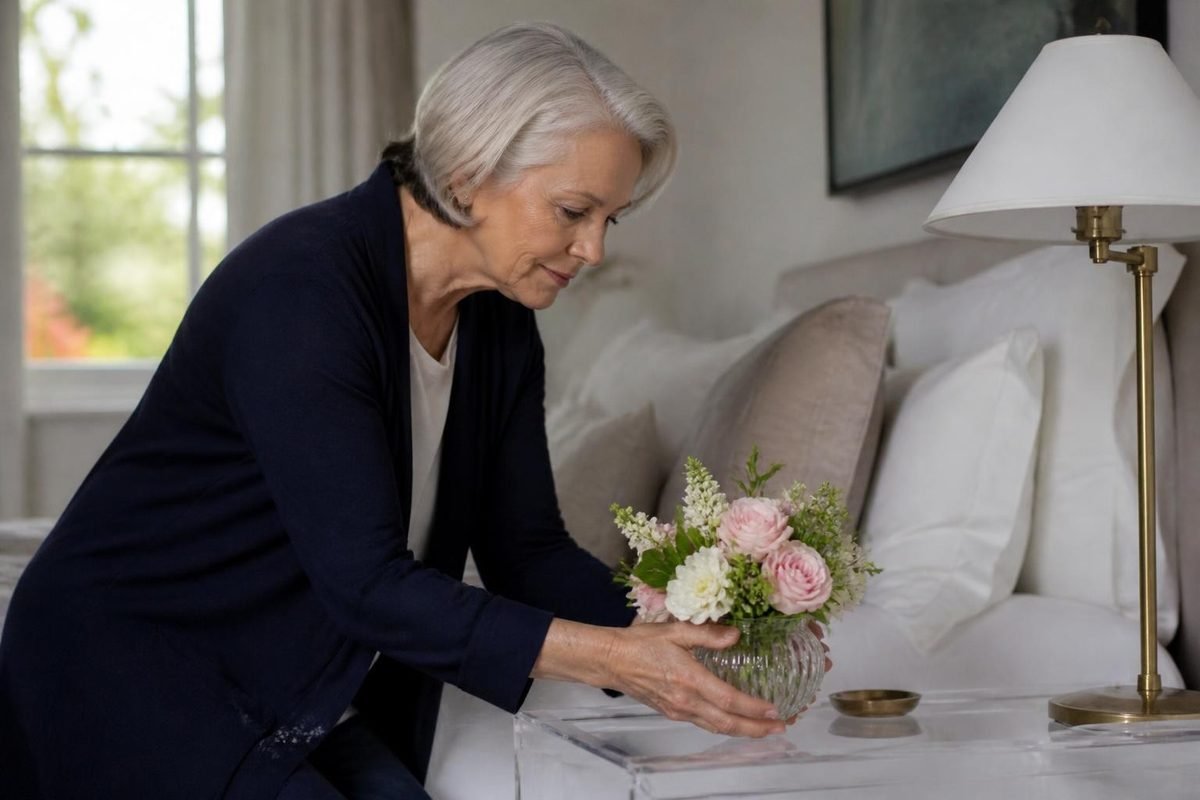
Choose get well flowers for an elderly parent by starting with their preferences, then considering where the arrangement will sit and how much care it needs. A small, gently scented arrangement in a stable container is often easier to enjoy than a large bouquet.
Start with their comfort
Think about the flowers and colors your parent already likes. A familiar favorite can feel more personal than a large display chosen only because it looks cheerful. If you are unsure, a mix of soft colors or a few bright blooms can make a pleasant choice.
Keep scent in mind, too. Strong fragrance may bother someone who has a headache, feels nauseated or is sensitive to smells. Ask for lightly scented flowers, or choose varieties that are not known for a strong scent. If your parent has allergies, ask what they are comfortable having nearby.
Consider their sight and the space around them. Flowers with clear shapes and colors that stand out from the background may be easier to appreciate from a chair or bed. Place the arrangement where it can be seen without blocking a lamp, a call button or a walking route.
Check the setting first
If your parent is in a hospital or care facility, call before sending flowers. Rules can differ between wards and rooms, and flowers may not be permitted in some areas. Ask about delivery times and include the information staff need to get the arrangement to the right person.
At home, look for a spot away from the edge of a table and clear of medicines, drinks and other daily necessities. A low, compact arrangement leaves room for conversation and is less likely to obstruct the view. A sturdy container can help prevent spills.
These details are worth checking before you order or arrange the flowers yourself:
- Any restrictions on flowers or containers at the care facility
- Your parent's preferred colors and any scents they dislike
- The available space on a bedside table or shelf
- Who can change the water and remove faded stems
Keep care simple
Choose an arrangement that does not need much handling. A container with a wide, stable base can be easier to manage than a tall, narrow vase. Avoid heavy pots if your parent would need to lift them alone.
Fresh flowers need clean water, and stems should be removed as they fade. If your parent is tired or has limited mobility, offer to help, or check that someone else can take care of the arrangement. Keep flowers out of reach of pets, and check that the varieties you choose are safe for any animals in the home.
Add a short note with a personal message. You do not need to promise a quick recovery. A few sincere words, such as “Thinking of you and sending love,” can be enough.
Questions you may have
Are flowers appropriate after surgery?
They can be, but check the care facility's rules and your parent's comfort first. Scent sensitivity and limited bedside space are good reasons to keep the arrangement small.
Should I send flowers to a hospital room?
Call the ward before arranging delivery. Some areas do not allow flowers, and staff can tell you what delivery details are needed.
What if my parent cannot care for flowers?
Choose a simple arrangement and ask someone nearby to handle the water and faded stems. If that is not practical, a card or a visit may be a better gift.
Further reading: florist customer loyalty